When most people hear “Montessori,” they might think of specialized schools that center around hands-on education. The same principles that help young children develop independence, confidence, and joy in learning can also support adults living with dementia.
In Kisco’s Heirloom memory care neighborhoods, we use Montessori-based principles as one of several tools that help residents feel more whole, valued, and engaged in meaningful daily life. It’s not the only approach we use, but it’s one we return to again and again because it works, is grounded in research, practical to implement, and deeply respectful of each person’s dignity.
Let’s explore what Montessori means in the context of memory care and how these principles come to life in our communities.
What Is Montessori and How Does It Apply to Memory Care?
The Montessori method, developed by Dr. Maria Montessori over a century ago, is built on the belief that people learn best through purposeful, hands-on activity in environments designed to support their success.
Montessori dementia care recognizes that:
Adults with cognitive conditions still have abilities, interests, and a deep need for purpose and dignity.
They benefit from environments that are thoughtfully organized and easy to navigate.
They thrive when engaged in real, hands-on activities rather than being expected to sit and watch passively.
They deserve to work at their own pace, with support that meets them exactly where they are.
Simply put, Montessori in memory care is about seeing the whole person, honoring their retained abilities, and creating opportunities for them to participate in life in ways that feel purposeful and dignifying.
Why Kisco’s Heirloom Program Uses Montessori Principles
Brenda, National Director of Kisco’s Heirloom memory care program, explains why Montessori resonates so deeply with our approach.
“What we like about Montessori is that it’s based in research — proven methods that work,” she says. “We also like that it’s practical. You can apply it today. It doesn’t have to be a big investment in dollars or a major change of the neighborhood.”
Montessori is also applicable across everything — not just engagement activities, but personalized care delivery, behavioral support, and day-to-day interactions.
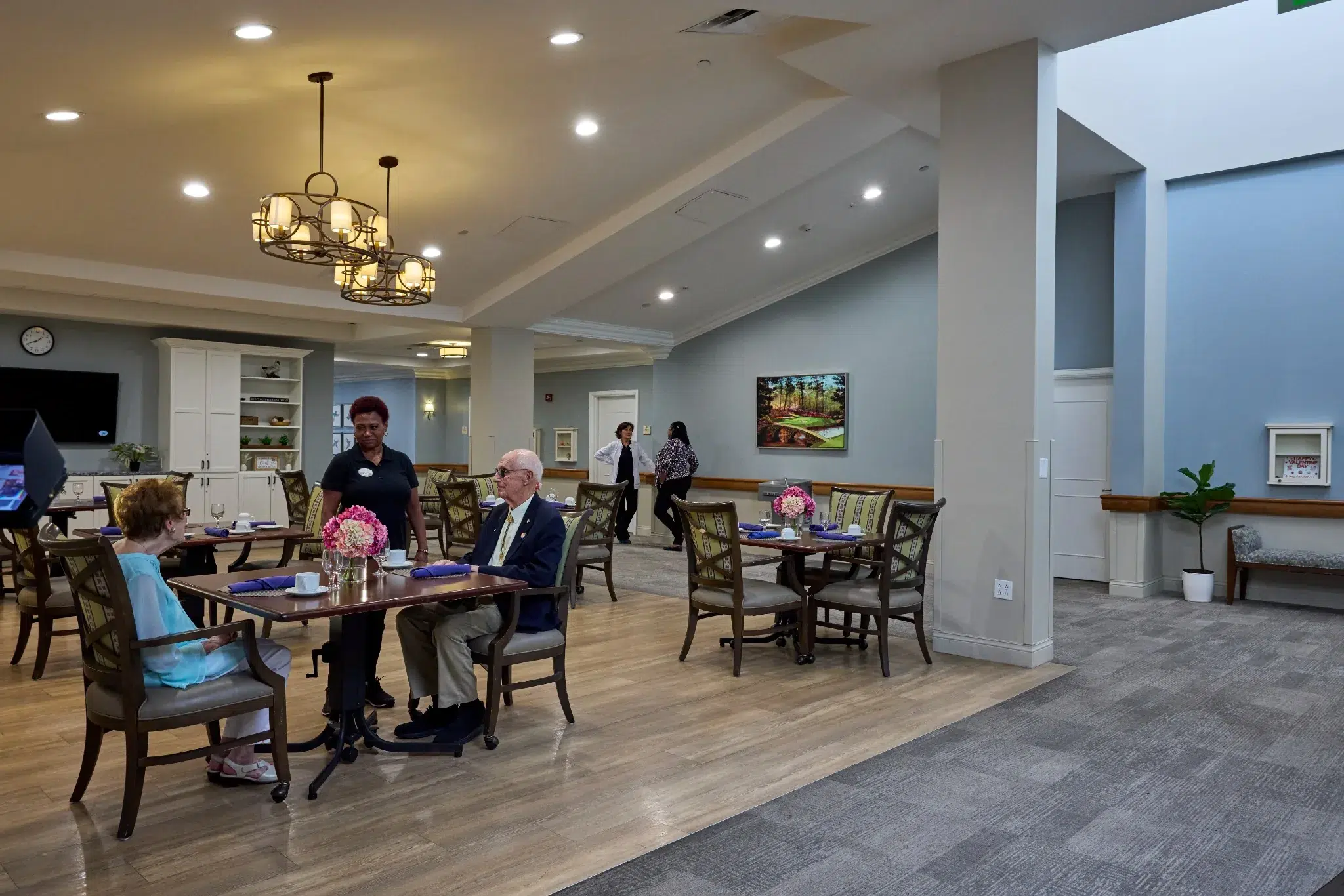
How Montessori Shapes the Environment, Not Just Activities
Thoughtful organization and visual cues. Spaces are designed to be intuitive and easy to navigate, with clear visual markers that help residents find their way.
Real materials and quality tools. During watercolor sessions, Heirloom communities use real watercolor paper instead of printer paper. For residents who were artists earlier in life, this matters deeply.
Secure and accessible. Subtle supports like taping watercolor paper down enable independence without being condescending.
Spaces that invite participation. Residents gather around tables where supplies are spread out and everyone can contribute.
Montessori and Personalized Care Delivery
Meeting residents where they are. Rather than expecting everyone to follow the same schedule or approach, associates ask: What does this person need right now? Maybe they don’t want to choose from a large menu of food, but benefit from being offered two different options.
Respecting autonomy and choice. Even in areas like personal care, offering choices — “Would you like to wear the blue shirt or the green one?” — honors residents’ autonomy.
Keep me in the loop
Subscribe to our newsletter for updates, tips, and stories on senior living & Kisco related content — delivered to your inbox.
Understanding behavior as communication. Montessori training helps associates recognize that behavioral expressions often communicate unmet needs.
Focusing on abilities, not deficits. Montessori encourages us to see what residents can do and build from there.
Practical Applications in Engagement
Breaking down tasks and offering meaningful choices
During watercolor painting sessions at Preston, some residents pick up a brush and start painting immediately. Others need more support. An associate might ask, “Which brush would you like?” That simple choice pulls the person into the activity. Then another step: “What color should we start with?”
Hands-on, real activities
Instead of a cooking demonstration where an associate prepares food while residents watch, Heirloom communities host group baking projects where residents actively participate — everyone gathers around a table, takes turns adding ingredients, passing the bowl, grating butter together.
Active engagement, not passive entertainment
At a reading club at Abbotswood at Irving Park, residents take turns reading short stories that include their own names and details about their lives. When someone hears their own name woven into the narrative, they light up.
Take engagements to their natural conclusion
After residents bake dog biscuits, the engagement doesn’t end when the treats come out of the oven. Residents package them up, write cards, and deliver them to the local humane society. The full sequence gives the activity meaning beyond just “keeping busy.”
Resident committees and clubs
At Crestavilla, residents in the card-making club create greeting cards for neighbors who are unwell or celebrating birthdays, contributing to the community’s emotional fabric.
Parallel programming and individualized engagement
While one group might be engaged in a baking project, another resident might prefer a sorting activity focused on their personal interest in plants and gardens. Heirloom communities offer parallel programming so residents can engage in what feels right for them.
Montessori as One Tool Among Many
It’s important to remember that Montessori isn’t the only approach Heirloom uses. “I wouldn’t say we’re Montessori all the time,” Brenda notes. Some situations call for other strategies, and some residents respond better to different approaches.
What Montessori offers is a framework for how to create environments and activities that honor dignity, support ability, and foster meaningful engagement.
Seeing the Whole Person
At its heart, Montessori in memory care is about seeing beyond the diagnosis to the whole person. The goal is to create opportunities for residents to experience success, make meaningful contributions, and engage in real, purposeful activities that honor who they are.
See Montessori principles in action at a Kisco Heirloom Memory Care neighborhood.
A research-based approach that applies Maria Montessori’s principles of hands-on, purposeful activity and supportive environments to dementia care. It honors residents’ dignity, retained abilities, and need for meaningful engagement.
How does Kisco use Montessori in Heirloom Memory Care?
Through real materials (real watercolor paper, not printer paper), broken-down tasks with choices, resident-led committees, parallel programming, and engagements taken through to their natural conclusion.
Is Montessori the only approach at Heirloom?
No. Montessori is one valuable tool. Heirloom teams also draw from other evidence-based practices depending on the resident and situation.
Can Montessori be applied outside of activities?
Yes. Montessori principles also shape how associates deliver personal care, offer choices, understand behavior as communication, and focus on abilities rather than deficits.
Disclaimer: Information provided above may vary by community. We encourage you to speak directly with each Senior Living community to confirm specific details and ensure the community is the right fit for your individual needs and preferences.